It can be difficult to convince people to read Thomas Aquinas, arguably the greatest medieval Western philosopher. And let’s face it, the impediments are real. First, there is our culturally inherited caricature of the Middle Ages as an interregnum of intellectual darkness during which all the knowledge acquired in the ancient world was lost or actively suppressed. The fact that one is likely to get advanced degrees in philosophy without ever having read or discussed a single medieval philosopher (or even caught a whiff of medieval history!) only further entrenches these ignorant and hackneyed clichés. Second, there is the fact that Aquinas is difficult to understand. Although he famously writes at the outset of his oversized Summa Theologiae that it is intended for “beginners” one needn’t get more than a few paragraphs in to wonder just how out of touch Thomas must have been with an average student! Frankly, it’s impossible to understand much of what he is up to without some grasp of Aristotelian metaphysics. And unlike Plato or Augustine, Aquinas’s prose is technical and bereft of literary flourishes—he sticks to arguments that adhere to the rigors of logic as he understood it, which leaves some readers cold. Finally, there is the persistent and pervasive sense that it is sufficient to read Aristotle, and Aquinas is simply not worth the bother.
In an earlier post (“Why Aquinas?”), I gave some initial reasons to think that Aquinas is worth the effort. But I’d like to go further today and argue that the form and structure of the Summa is an exemplar of philosophical inquiry quite generally, and that this literary form points us not only to the true value of philosophy, but also to a better understanding of its place as the cornerstone of the liberal arts.[1]
The Summa (an unfinished work!) is divided into 512 topics (quaestiones), which are subdivided into 2, 668 articles (articuli). The fewest articles that Thomas devotes to a single topic is two, the most he devotes to a single topic is seventeen. All articles that fall under a topic also begin with a question, the determination of a further problem relating to the main topic to be addressed. For example, under the topic of Free Will, Aquinas asks: (1) Whether man has free will? (2) Whether free will is a power? (3) Whether free will is an appetite? (4) Whether free will is a power distinct from the will? But notice that not any old question will do to begin an article—it must be framed so as to admit to opposing answers, a pro and a con. Such questions are, according to Otto Bird, “formally dialectical.” A dialectical question is distinguished from all others by the fact that it leaves one free to take either side of a contradiction. [Aristotle, De Interpretatione, 20b23-30] Questions of the form, “What is the nature of X?” are not dialectical, because they admit of only one answer. For that reason, Aquinas avoids them.
Having posed a question that admits of opposing answers, which demonstrates that we are in the realm of a disputation, Aquinas proceeds to give arguments for both sides. He uses the language of “sic proceditur” which is best translated as “thus it is argued or disputed.” This signals to the reader that an answer will not simply be given to the reader, but that real work needs to be undertaken in order to reach a resolution to the problem at hand. Notably, Aquinas always begins by giving the argument for the side he will ultimately oppose, called “objections” and he usually presents three or four of them at the start. In presenting objections to his own view, Aquinas is not simply engaging in conceptual analysis or surveying logical space. Rather, at this stage he is consulting the “authorities,” those whose opinions have been handed down to us as worthy of serious engagement. For Aquinas, these authorities are the Patristics (the “Fathers” of the early Church, both Latin and Greek), other medieval philosophers, including Jews (Maimonides) and Arabic philosophers, (Avicenna and Averroes), and of course pagan thinkers like Plato, Cicero, and most especially Aristotle, who carries such weight and authority with Aquinas that he simply refers to him as “the Philosopher.”
Following the initial set of arguments or objections we make our way to the sed contra, the arguments for the contrary view, and the one that Aquinas will ultimately favor. Having looked at arguments on both sides, the reader finds herself in a state of indetermination. She is ready to move on to the next part of the article, known as the respondeo, (“I respond thus”). The respondeo contains Aquinas’s own considered view and his arguments for it—it is his resolution of the problem at hand. The respondeo is clearly the heart of the entire article, but certainly not the whole of it. It would be a huge mistake to skip what proceeds and follows it.
It is crucial to the form of the article that it does not end with Aquinas’s arguments in favor of his own view. Instead, the article draws to a close by revisiting the initial arguments opposing those given in the respondeo. These are called the “replies to the objections” and Aquinas painstakingly goes through each objection and offers a detailed response to it. Only once his opponent has been given his full due does Aquinas move on to the next question.
The value of this method, which we may call “dialectical disputation” is that it forces the reader to actively participate in a discourse that will allow her to learn by seeing for herself how the resolution to the problem has been arrived at. In fact, the article format itself is a model of how discourse ought to operate: one begins one’s inquiry with an open ended, dialectical question, carefully considers the best arguments from renown thinkers on both sides, and then works up one’s own arguments for the view one favors. Having grasped the reasons for one’s own conclusion, one must give one’s opponent full due by responding to him in detail.
One sees that Aquinas’s method is the antithesis of what we have been conditioned to expect from a medieval thinker—it is neither dogmatic (in the negative sense), nor insular, nor ignorant, nor closed-minded. The value of the method displays the value of philosophy itself: the mind’s active and open search for truth, that good in which the mind naturally rests. This search is demanding, and it requires that we consider propositions and arguments we find deeply offensive and problematic (for instance, Aquinas constantly entertains arguments against the basic tenets of his own faith throughout the Summa). The reason Thomas must consider opposing views is that some of the best minds he knows of have reached conclusions that are opposed to his own deeply held convictions—convictions that shape his identity as a Christian friar and structure his way of life.
Aquinas’ method shows that the pursuit of truth takes diligent effort, courage, and charity. But the pursuit of truth is worth the risks and the strain, because it allows us to attain the good of the intellect, a crucial component of the good life. For this reason philosophy—the pursuit of wisdom—is the center of a liberal arts education, which, by contrast with the servile arts, aims at nothing other than human freedom and fulfillment.
Jennifer A. Frey is a principal investigator with Virtue, Happiness, and the Meaning of Life.
Further Reading
Otto Bird. “How To Read An Article of the Summa.” New Scholasticism 27(1), 1953.
McGinn, Bernard. Thomas Aquinas’s Summa Theologiae: A Biography. Princeton: Princeton University Press, 2014.
Torrell, Jean-Pierre, O.P. Aquinas’s Summa: Background, Structure, and Reception. Washington, D.C.: Catholic University of American Press, 2005.
[1] For my own understanding of the structure and importance of this format, I am deeply indebted to Otto Bird’s “How To Read An Article of the Summa” New Scholasticism 27 (1), 1953. Otto Bird was the founder of Notre Dame’s Program of Liberal Studies, a “great books” program that focuses on a traditional liberal arts education.
Sometimes aspects of human life, development, and experience that seem like they ought to go together fail to coincide. Good adults—people who work to be honest and fair, to establish loving and supportive homes and strong communities, to achieve important goals through their work or their engagement with various projects—can feel dramatically undernourished by these efforts. Highly successful adults (who may or may not be especially good people) can find their that their own achievements seem empty. Adults who work hard and successfully to make things better for other people can experience flattening burnout. Those who are exquisitely good at producing and safeguarding their own comfort and security—sometimes by working to build a solid network of support with friends or family members—find themselves bored or stifled by their very success at making things safe for themselves. They can feel isolated in the midst of their apparently strong social world. And, as has been noticed in many different ways and many different cultural contexts for many, many years, adults who try to pursue their own pleasure or happiness directly normally fail.
One of the central goals of our research project is to take notice of these and other ways that people can find themselves at odds with themselves, even when they appear to be, in many respects, highly functional, strongly self-directed, and significantly well-socialized. In spite of clear self-actualization, in spite of personal achievement on their own account or for the sake of others, in spite of their efforts to conform to many of the standards governing success in their private and professional lives, these people are neither enjoying themselves nor finding their lives fulfilling.
One traditional way of handling these cases of finding oneself at odds with oneself is to suppose that, e.g., those apparently good people are not really virtuous people, since truly virtuous people find joy and meaning in the results of their efforts to be good; that individual achievement, status, and power are at best incomplete goals; that, however important comfort and security are, they are not enough to make a life that feels like a life worth living; and that trying to go for pleasure or happiness directly represents a misunderstanding of the nature of real pleasure and true happiness. There is something to be said for all of these ways of addressing the kinds of conflict that begin to appear when people have worked very hard to build lives for themselves and then find themselves ill at ease in the lives that they have worked hard to build. Our project is working to go at this situation from a slightly different angle.
We are treating cases in which adults are ill at ease with the apparently good lives they have struggled to build as cases in which somehow virtue (broadly construed), happiness (at least in the guise of subjective satisfaction with oneself and one’s life), and a sense of meaning or purpose have come apart. A key question that we are asking ourselves, in and through our very different research modalities, is whether the missing ingredient in these busy, unfulfilling lives might be what some psychologists, sociologists, and medical practitioners call “self-transcendence.”
It is hard to find a single meaning of the term “self-transcendence” in the scientific literatures on the topic. One of the things we hope to do in our work is develop a better understanding of self-transcendence. The term seems to have come into some prominence in motivational psychology—psychology focused on human needs and goals—when Abraham Maslow added a new and higher level to his hierarchy of needs in the early 1960s. In the 1940s, Maslow had thought that there were five sorts of human needs basic to human life, and treated these as arranged hierarchically—at the base were biological needs, at the next level up, needs for safety and security, then social needs, then needs for self-esteem, and finally needs for self-actualization. A good human life was a life in which all of these needs were met.
Maslow tended to think of these needs as coinciding (more or less) with stages of psychological development, such that different stages were focused on meeting different needs, although he recognized that there were problems with this way of thinking about the hierarchy. Late in his career, he began to notice that it looked like there was a still higher level of basic human need—one that went beyond self-actualization. He named this level “self-transcendence.” As Mark Kolto-Rivera put it:
[Maslow’s] earlier model positions the highest form of motivational development at the level of the well- adjusted, differentiated, and fulfilled individual self or ego. The later model places the highest form of human development at a transpersonal level, where the self/ego and its needs are transcended. This represents a monumental shift in the conceptualization of human personality and its development. At the level of self-actualization, the individual works to actualize the individual’s own potential; there is thus, at least potentially, a certain self-aggrandizing aspect to this motivational stage, as there is with all the stages below it in Maslow’s hierarchy. At the level of self-transcendence, the individual’s own needs are put aside, to a great extent, in favor of service to others and to some higher force or cause conceived as being outside the personal self [“Rediscovering the Later Version of Maslow’s Hierarchy of Needs,” in Review of General Psychology (2006), Vol. 10, No. 4: 306-307].
Some aspects of Maslow’s understanding of self-transcendence continue to inform the empirical psychological literature on the topic in unfortunate ways, however. For example, Maslow thought that self-transcendence was marked by what he called “peak experiences.” Peak experiences were experiences in which one seemed to be outside oneself, often merging with something beyond oneself. It is true that some forms of mystical religious experience, some profound experiences of nature, and so on, can feel like they dissolve the boundaries of the self. But so can delusional experiences and the kinds of experiences that come of taking hallucinogenic drugs. The difficulties with attempts to study self-transcendence as crucially involving peak experiences is that such studies can’t reliably distinguish an experience of the sacred in nature from the experience of acid trip or a psychotic delusion.
Accounts of self-transcendence as a feature of mature human development involving integrated awareness of one’s own values and aspirations (intrapersonal development), increased capacity to be aware of and relate to others and one’s environment (interpersonal development), an increased ability to integrate one’s understanding of the past and expectations for the future in ways that have meaning for the present, and broadened perspectives about one’s own life in its social and historical context (transpersonal development) have begun to shape literatures on nursing. Nurses working with geriatric patients and patients with serious cancer diagnoses have made important strides in developing accounts of entirely grounded, non-delusional self-transcendence. Nurses have a stake in thinking about aspects of human development that tend to give people strong attachments to their own lives and to equip people to make appropriate decisions about their own care. Not only do nurses fare better themselves if they understand their work in a self-transcendent context, they find that their patients who have developed strongly self-transcendent orientations have better health outcomes.
One hope of our work is to build from prior work on self-transcendence in ways that allow us to think about self-transcendence as pointing to a context in which efforts at moral self improvement—for example, ongoing cultivation of virtue—are situated in a way that goes beyond plain enlightened self-interest. We are asking ourselves (among other things) whether a self-transcendent orientation might be the missing link between work at living an ethically good life, a sense of purpose in life, and the kind of deep happiness that comes of a life oriented to goods that go well beyond self-actualization.
Candace Vogler is the David B. and Clara E. Stern Professor of Philosophy and Professor in the College at the University of Chicago, and Director and Principal Investigator for Virtue, Happiness, & the Meaning of Life.
I am interested in awe as an emotion – and even as a potentially virtuous emotion. But what is awe?
The word ‘awe’ is thought to be derived from the Old Norse word ‘agi’ (terror, dread), a word which exists in contemporary Icelandic in permutations such as ‘ægilegur’ (terrifying). Over the centuries, however, the centre of gravity in ‘awe’ moved from the terrifying to the fantastic, probably hand in hand with a decreased fear of supernatural powers. Yet a slight hint of underlying terror may still remain in the term in some locutions, which makes awe less than an exclusively ‘positive’ emotion.
Ostensive definitions often constitute a helpful entry point to conceptual analyses. Václav Havel, the late Czech writer and statesman, once reminisced on a day when, languishing as a dissident in prison, he began to gaze into the crown of an enormous tree that rose up and over the prison fences: ‘As I watched the imperceptible tremblings of its leaves against the endless sky, I was overcome by a sensation that is difficult to describe: all at once, I seemed to rise above all the coordinates of my momentary existence in the world into a kind of state outside time in which all the beautiful things I have ever seen and experienced existed in total “co-present”’. Havel continues to describe the characteristics of this beatific experience as those of reconciliation and elation. I submit that however we specify awe, it must at least capture some of the essential features of Havel’s experience: those of elevation, the spontaneous overflow of feelings, heightened awareness, transcendence (of ordinary objects of experience), sense of unity, etc.
Another instructive starting point is to engage in introspection: to identify personal episodes that one would require any workable definition of awe to cover. Here are three from my own life.
(1) I first visited Hljóðaklettar – a well-known area of columnar-craters, presenting unique ‘basalt roses’, in a national park in the north-east of Iceland – on an early October day as a 17-year old. All the tourists had gone, there was not a single person in sight; only the ‘rosy’ columns surrounded by low birch trees in autumn colours, with a mighty grey glacial river providing a stark background contrast. I experienced feelings of aesthetic ecstasy, mingled with a sense of enormity, oneness and of time standing still. I have never been fully able to recapture that feeling, there or elsewhere, although I have caught glimpses of it when listening to great pieces of music such as Tchaikovsky’s Violin Concerto.
(2) During a gap year as a 20-year old, I unwisely took up a job as a high-school teacher. Having to teach seriously disruptive students without being prepared to do so through either experience or training, this one-year of work stretched my mental and physical resources towards breaking point. I was basically at my wits’ end. My father watched my gradual mental deterioration from close by but without being able to do anything substantial to remedy the situation. Probably out of a sense of despair, more than anything else, he bought me an expensive watch. When he passed it on to me, without saying a word, I immediately sensed what had happened. I felt an overpowering sense of elevation – not so much in the form of moral admiration at my father’s gesture or a desire to want to emulate him as a moral exemplar (although those emotions featured also), but rather by way of intense appreciation that such depth of goodness could exist in the world. At the philosophical risk of ‘having one thought too many’, my most profound emotion was thus directed at the ideal of moral goodness rather than at my father as a person.
(3) When watching a Horizon documentary on BBC about the concept of infinity, I felt as if I had entered a magic kingdom. Covering topics such as those of possible parallel worlds, the mystery of the singularity of a black hole and the prospects of an endless array of universes, this documentary truly enthralled me. I felt intellectually elevated, spirited up to a transcendent reality where I existed as an ineluctable part of a great chain of being. I recorded the programme and have watched it again and again, each time reliving some of the emotion of the first viewing but never taken again to the same experiential heights.
Let me hypothesise that what these three experiences had in common was the single emotion of awe, but targeting the different ideals of beauty, goodness and truth, respectively. Working on that assumption, I propose to make it a condition of any plausible characterisation of awe that it can account for those experiences as experiences of awe.
To cut a long story short, I propose the following characterisation of awe, organised via the standard parameters of an Aristotelian emotion: (1) The subject of awe is the person experiencing it. (2) The feeling of awe is intense and predominantly pleasant although it may be slightly tainted with a sense of impending terror. (3) The object of awe is captured by the cognition that the subject is experiencing or has experienced an instantiation of a truly great ideal that is mystifying or even ineffable in transcending ordinary human experiences. This experience is perceived to have increased existential awareness and connected the subject to a greater whole. To put it technically, this means that awe constitutes an essentially self-reflexive experience. (4) The target of awe is constituted by the ideals of the famous Platonic triad of truth, beauty and goodness (while truth and beauty may be instantiated in amoral or immoral ways). Depending on whether the target is truth, beauty or goodness, awe presents itself as the more specific emotions of intellectual elevation (for truth), moral elevation (for goodness) or aesthetic ecstasy (for beauty). (5) The characteristic desire in awe is that of continuing to experience the emotion or experiencing it again, preferably more profoundly, by coming even closer to the targeted ideal itself.
A lot more needs to be said about the contours of awe and under what conditions it can be experienced virtuously – but these are, for me, at least the bare beginnings.
On Awe – Part 1, December 9, 2015
Kristján Kristjánsson is Professor of Character Education and Virtue Ethics; Deputy Director of the Jubilee Centre for Character and Virtues, University of Birmingham, and a scholar with Virtue, Happiness, and the Meaning of Life.
Neo-Aristotelian accounts of emotion virtues would benefit from the inclusion of awe. Fitting awe into an Aristotelian architectonic makes better sense of it than recent analyses from the perspective of positive psychology. Awe can be seen to encompass the transpersonal attachment to ideals such as truth, beauty, and goodness – with ‘elevation’, for example, best understood as awe directed at moral goodness. Aristotle did not pay attention to awe or similar emotions, and he was wrong in not doing so, because awe can produce a heightened sense of the status of one’s self in the grand scheme of things.
In his 1864 book on Aristotle,[1] English literary critic and philosopher George Henry Lewes describes him as ‘utterly destitute of any sense of the Ineffable’. ‘There is no quality in him more noticeable’, Lewes observes, ‘than his unhesitating confidence in the adequacy of the human mind to comprehend the universe’, and this ‘unhesitating mind’ is utterly ‘destitute of awe’. Given some of Aristotle’s passionate remarks about the wonders of nature, as well as his whole Book 10 celebration of contemplation of unchanging universals, in the Nicomachean Ethics, Lewes’s comments may seem churlish. Yet it remains true that Aristotle offers no account of transpersonal emotions such as awe, directed at ideals and idealisations, as distinct from emotions directed at oneself, other persons, or external events. What many commentators consider one of the main attractions of an Aristotelian account of flourishing as the aim of education and of life in general, namely its this-worldliness and its ‘affirmation of [the attainments of] ordinary life’[2], may easily degenerate into a philistine fetishisation of the mundane, possibly accompanied by a sense of ‘emptiness, or non-resonance’.[3] I see eerie signs of that in some neo-Aristotelian accounts of late (and I do not exclude my own account there).
In World Light[4], the 1937 tour-de-force Hardy-meets-Cervantes-meets-Dostoyevsky novel of the Icelandic Nobel laureate Halldór Laxness, we encounter the protagonist (anti)-hero Ólafur Kárason and follow his chequered trajectory through life. Abandoned by his mother and living in squalor with an abusive foster family, Ólafur remains bedridden through much of his childhood, suffering from a condition that would probably be DSM-diagnosed as a mixture of post-traumatic stress disorder, vitamin deficiency and hypochondria. After being cured by a mystical figure (at a juncture where the writing style of the novel subtly moves from social realism into magic realism as is the author’s wont), Ólafur embarks on a Quixotic journey of continued physical and emotional torments, ruinous love affairs, a tortured marriage, several children, shady dealings with crooked capitalists, supernatural encounters of varied provenance, and a descent into paedophilia (which destroys his ambitions a teacher).[5] Always the loser but never embittered or beaten, Ólafur strives to achieve his childhood vision of becoming a great poet; yet he never succeeds in achieving anything close to greatness, partly because of lack of any noticeable talent, partly because of adverse circumstances.
In a life that only seems to offer recipes for disaster, Ólafur is sustained by one consolation: his quest for ‘the epiphanic resonance of the divine’, attained through glimpses, far and few between since childhood and recurring flashbulb recollections of those glimpses, where he comes ‘face to face with the inexpressible’ and experiences ‘infinite chorus glory and radiance’. In those rare moments of exaltation, Ólafur’s whole sense of self dissolves into ‘one sacred, tearful yearning’ to be united with something higher than himself – transfigured by infinite truth and beauty. Symbolically, at the end of his life, he embarks on a final redemptive journey (at Easter) up to a glacier, the earthly representation of his vision of vastness and transcendence, where the mountain meets the sky and ‘becomes one with Heaven’. He disappears into the depths of the glacier, becoming one with it, in a place ‘where beauty reigns forever, beyond all demands’.
Ólafur Kárson’s life is almost as far away from that of the privileged phronimos as one can imagine. Deprived of moral luck and hampered by his own dearth of moral character and intellectual stamina, Ólafur’s life may, at first sight, seem to be best described as wretched rather than eudaimon or blessed. Yet there is something exquisite about its wretchedness. The hope of ‘the epiphanic resonance of the divine’ gives it meaning and unwavering purpose. Some readers see World Light as a simple reminder of how a creative spirit can survive in even the most crushing environment and the most uncompromising human vessel. But there is, I submit, more to it than that. Imagine Ólafur as having been brought up by good people under fortunate life circumstances, yet retaining his ecstatic, enchanted encounters with the ideals of oneness and beauty, and you have a life that somehow seems to surpass that of the fully virtuous phronimoi, or the great-souled megalopsychoi, or of the successful contemplators described by Aristotle. Despite its abysmal failings, Ólafur’s life appears to retain something of the putative attainments of the human ergon that Aristotle misses. If that is the case, philosophers and educators developing an Aristotelian vision of human flourishing need to take notice.
[1]Aristotle: A Chapter from History (London: Adamant Media, 2001).
[4] London: Vintage Books, 2002, translated by Magnus Magnusson.
[5] Iceland had a long history of sending young men incapable of any respectful job into teaching.
On Awe – Part 2, December 10, 2015
Kristján Kristjánsson is Professor of Character Education and Virtue Ethics; Deputy Director of the Jubilee Centre for Character and Virtues, University of Birmingham, and a scholar with Virtue, Happiness, and the Meaning of Life.
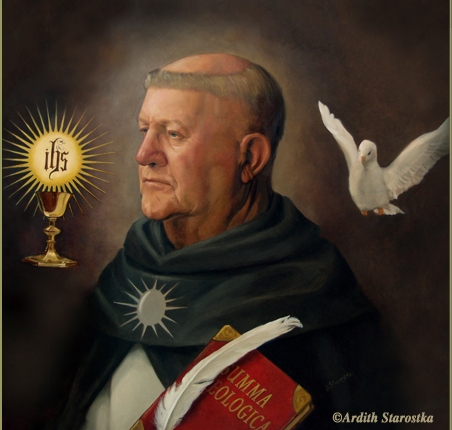
In my last post, I introduced the person of Thomas Aquinas, a thirteenth century theologian and mendicant friar in the newly formed Order of Preachers. Today I want to outline my own reasons for agreeing with the eminent moral theorist, Philippa Foot, who writes: “It is my opinion that the Summa Theologica is one of the best sources we have for moral philosophy, and moreover that St. Thomas’s ethical writings are as useful to the atheist as to the Catholic or other Christian believer.”[1] Why would Foot, an avowed atheist who is said not to have had a religious bone in her body, counsel us to turn to a medieval theologian for answers about the good life? Why doesn’t she just stick with the more familiar and accepted Aristotelian source material?
This is the first in a series of posts that will address a question I am frequently asked by academics (especially philosophers), students, and the curious at large: Why read and write about Aquinas in a contemporary theoretical context? Or, more pointedly, How can a Medieval Scholastic theologian be relevant to our secular culture and academy? It’s a great question and I’ll attempt to explain my own reasons, though I’ll also state up front that I’m not sure whether it’s any weirder or more problematic to turn to the thought of a Medieval friar than it is to turn to the thought of the Ancient Greeks. In either case, one is attracted to those truths that appear to transcend the remote and alien cultures in which they were first articulated.
Since Aquinas–unlike Aristotle–is not frequently taught in philosophy departments in a serious way, it’s best to begin my explanation with a prior and more pressing question: Who is Aquinas?
Thomas Aquinas was born into a noble and politically influential family sometime between 1224 and 1226 in what is now Southern Italy (his father was Landulph, Count of Aquino; hence the name Aquinas). At five Aquinas was sent by his family to study at the Monastery of Monte Cassino, in the hopes that an education there would lead to a prominent ecclesiastical appointment. About ten years later, however, Aquinas’s family has him leave the monastery to attend the first “state” university of the period, the University of Naples, probably in the hope that he will serve the Emperor Frederick II in some official capacity. In Naples Aquinas receives a traditional liberal arts education, and is introduced for the first time to the writings of Aristotle. He also gets mixed up with some radicals, in particular the newly founded mendicant preachers, the Dominicans (calling them radicals is not in the least extreme; to the establishment classes, they were thought to be ridiculous fools at best, demented and dangerous heretics at worst). The Dominicans, like the Franciscans, promoted a way of life that combined apostolic poverty and direct contact with ordinary people; such a choice of life stood in stark contrast to the wealthy and sheltered monastic life at Monte Cassino. For the Dominicans the life of study was especially important, as they charged themselves with the task of preaching the faith, including the idea that the life of virtue is necessary for happiness.
At about 18 or 19 Thomas informs his parents that he intends to become an itinerant, “begging friar.” In a contemporary American context, it would be like the son of a prominent conservative politician turning down a powerful internship in DC in order to start up his own organic homestead in the woods. His parents were obviously none too pleased with this turn of events. In fact, they basically kidnapped Thomas on his way to Paris and put him under house arrest in the hope that he would come to his senses. But Thomas would not relent, and eventually in 1245 his family allows him to study in Paris at a Dominican convent. It is here that he first meets his famous teacher, Albert the Great, a fellow admirer of Aristotle.
For the rest of his life Aquinas dedicates most of his efforts to tackling the big questions in human life: what we ought to believe (and why) and how we ought to live (and why). In the context of the University of Paris where he began his career, Aquinas is held in suspicion by many of his colleagues, for two main reasons: (1) his appropriation of and fondness for Aristotle, which alarmed theological conservatives and (2) his status as a mendicant friar. Indeed, his inaugural lecture was boycotted by many prominent faculty. The Dominicans soon sent Aquinas to work directly with young friars in various cities in Italy, and his university career only lasted for seven years.
In 1274 Aquinas dies on his way to advise at the Second Council of Lyons. Shortly before his death he had stopped writing altogether (depending on the source, one reads he either had a nervous breakdown or a mystical vision; in either case he saw no point in writing any more, and he left his great Summa Theologiae unfinished). After his death, parts of Aquinas’s writings are condemned as heretical by the Bishop of Paris, and his work was, for a time, basically ignored. Eventually, however, he would become one of the most influential thinkers in the West. Doubtless nothing would have surprised the humble friar more than his intellectual legacy and our contemporary perception of him as an “establishment” figure. There was little evidence in his own time that this would be his fate.
In my next post, I will begin to discuss how Aquinas’s life impacts his thought about virtue and human nature, and why Aquinas is so central to our own investigation into these topics.
Jennifer A. Frey is a Principal Investigator with Virtue, Happiness, & the Meaning of Life, and Assistant Professor of Philosophy at the University of South Carolina.
‘Vir,’ the Latin root for the term, links to the term for the male organ–as in ‘virile’–and was used to denote a strength of some sort.
In contemporary philosophy and religious studies, a virtue is a character trait, not a personality trait. Social scientists sometimes treat character traits such as virtues as features of personality, but some scholars have recently begun working on the necessity of elucidating the strict separation of work on personality from work on character. ‘Character’ is a developed, stable way of taking in what you get from the world, feeling/emotion/response to others, and action. For example, kind people don’t just help people who fall down on the ground in front of them, although they normally WILL do that; kind people also find instances and reports of cruelty painful, look for ways to make others’ lives go more smoothly, enjoy it when things go well for others, and try to avoid injuring people. Kind people notice the kinds of things that injure or could injure others. Kind people also are willing to do unpleasant things for the sake of helping others, and may even be willing to do dangerous things to help others. That is plain old virtue at work. Kindness may start when caretakers invite a child to think how she would feel if someone else did/said that thing (that she just did/said) to her.
There are two sorts of virtues–strengths–that our philosophers and religious thinkers have studied. These two are acquired virtue and infused virtue.
An acquired virtue is a strength of character that develops by doing the things one ought to do–e.g., telling the truth, paying your bills, looking after the health and well being of those who depend on you. Children begin to develop proto-virtues by obeying adults and gradually stopping doing the kinds of things that make it really hard to look after groups of children–hitting, lying, being selfish with toys or crayons, etc. Acquired virtues become habitual, and help direct the person towards good, but like any habit, they can also be broken, become infrequently used, or go entirely absent.
An infused virtue, on the other hand, is one given to you, and not one you can acquire. In Christian theology, infused virtues are given to us by God. Virtues that Catholic theologians always consider to be infused include faith, hope, and charity. Thomas Aquinas believed that infused virtues such as these prepare us for union with God. Instead of becoming confused, losing wisdom, and going astray–as we are wont to do–we are kept on track by our infused virtues, and our whole natures are better ordered towards the pursuit of what is best and most just, making us right with ourselves, each other, and God.
Aquinas thinks that he finds in Aristotle the idea that even plain old virtue is directed to the common good–basically, that my virtues (if I have any) are at least as likely to benefit others as they are to benefit me, and that the benefit to others is genuine benefit–I help contribute to GOOD ways of producing and reproducing the GOOD aspects of the social world we share. Although it is not at all clear that this view comes from Aristotle, what IS clear is that virtue is hard to cultivate and puts people at risk in various ways. Testifying truthfully in court about gang activity in my neighborhood can make me a target for bad stuff, for example. It is not nearly as easy to be kind to angry or frightened and unpleasant people as it is to be kind to puppies, well-behaved children, and pleasant adults. But it is often the unpleasant living things that need kindness.
Virtue, then, is not an attitude, although attitudes often go along with virtue. It is not a belief system or a kind of desire or a kind of feeling/emotion, although virtue shapes thoughts and feelings. It is closer to a stable, cultivated way of noticing what’s going on and responding to what’s going on (inwardly and through one’s actions) aimed at supporting, enabling, or doing actual good. On the traditional account, even though there are distinct virtues, these have to work together if actual good is supposed to be the result. For instance, it isn’t kindness if I tell you lies in order to make you feel better, even if telling you the truth will likely make both of us feel worse. It’s not generosity if I offer to drive the getaway car when you guys are set on armed robbery. Personality traits concern me and my psychology. Character traits can correct aspects of my personality. For instance, if I tend to be irritable or gullible or petty, virtues like temperance, practical wisdom, and justice can help to correct these flaws in my personality. If I am impulsive, virtue can help bring a measure of thoughtfulness and care to my doings. Basically, virtues help to govern my mind, emotions, will and actions so that I can pursue good without sabotaging my own efforts or impeding myself.
Candace Vogler is the David B. and Clara E. Stern Professor of Philosophy and Professor in the College at the University of Chicago, and Principal Investigator for Virtue, Happiness, & the Meaning of Life.
Bandar Togel Terpercaya dengan Reputasi Internasional dan Layanan Terbaik di Asia
Kompetisi PvP terbaru bikin suasana makin panas, gabung melalui Result macau. Tips build karakter harus sesuai gaya bermain. Tidak semua setup cocok untuk semua player.
Situs togel online resmi yang menawarkan pasaran Hongkong menjadi salah satu pilihan Toto Togel aman dan terpercaya bagi pemain. Dengan metode deposit yang fleksibel seperti Dana, pemain dapat dengan mudah menyetorkan modal mereka tanpa kesulitan. Pasaran HK menawarkan hasil yang adil dan cepat, menjadikannya salah satu pasaran yang paling diminati oleh para pemain togel.
Kemudahan transaksi menjadi salah satu alasan pemain memilih situs togel tertentu. Dengan pilihan deposit menggunakan Dana dan Gopay, beberapa Togel Terbesar menawarkan proses yang cepat dan aman untuk pemain, sekaligus menyediakan pasaran lengkap dengan peluang besar.
Banyak yang mulai pakai strategi split push baru buat naik rank lebih cepat, tutorialnya ada di bd-innovations.com. Event raid boss membutuhkan kerja sama tim yang solid. Pemain solo biasanya cukup kesulitan menyelesaikannya sendiri.
Turnamen PvP minggu ini jadi salah satu yang paling ditunggu karena mempertemukan player terbaik dari berbagai server tonton highlight-nya pedetogel login. Komunitas sering membahas build terbaik untuk tiap karakter. Ini membantu meningkatkan performa permainan kamu.
Patch kali ini juga ngubah AI musuh yang bikin gameplay lebih menantang saat Togel. Banyak game online menyediakan fitur friend list. Ini memudahkan pemain mengundang teman bermain.
Patch kecil kemarin ternyata memperbaiki glitch penting yang sering dimanfaatkan pemain, penjelasan lengkapnya bisa kamu lihat melalui toto. Mode latihan cocok buat uji mekanik baru. Gunakan sebelum masuk ranked biar lebih siap.
Strategi Terbaik untuk Menang di Bo Togel dengan Hadiah Tertinggi
Menang di Bo Togel bukan hanya tentang keberuntungan; ada strategi yang dapat meningkatkan peluang Anda secara signifikan. Dari memilih nomor yang tepat hingga memahami pasaran yang paling menguntungkan, artikel ini akan membahas strategi terbaik untuk meraih Bo Togel Hadiah Terbesar. Dengan sedikit perencanaan dan analisis, Anda dapat meningkatkan kesempatan untuk meraih kemenangan besar di Bo Togel.
Banyak pemain togel yang mengandalkan hasil Keluaran Macau untuk merumuskan angka taruhan mereka. Hasil ini biasanya diumumkan secara resmi dan mencakup berbagai pasaran. Dengan mengecek keluaran Macau, pemain dapat menentukan angka terbaik untuk taruhan berikutnya.
Tidak hanya sekadar angka, tetapi Keluaran Macau juga menjadi alat analisis bagi bettor yang serius dalam bermain togel. Banyak pemain yang mencatat angka-angka yang keluar setiap hari untuk mencari tren tertentu yang bisa digunakan sebagai referensi taruhan berikutnya. Semakin cepat mereka mendapatkan informasi mengenai hasil keluaran, semakin baik pula mereka bisa mempersiapkan strategi taruhan.
Patch terbaru bikin beberapa konten lama relevan lagi dan layak dimainkan ulang menurut toto. Tips bermain konsisten lebih efektif daripada maraton sesekali. Progres jadi stabil.
Skin karakter edisi terbatas mulai muncul di toko dalam game dan langsung jadi incaran pemain, informasinya ada pada Togel 4D. Turnamen PvP selalu menarik perhatian banyak pemain. Persaingan sengit membuat pertandingan terasa lebih seru.
Variasi Jenis Taruhan yang Bisa Dipilih dalam Toto Togel
Skin eksklusif rank tinggi ini bikin tampilan makin beda dan syaratnya ada di toto togel. Update anti-cheat bikin permainan lebih adil. Pemain jujur jadi lebih nyaman.
Salah satu keuntungan bermain Toto Togel adalah adanya berbagai jenis taruhan yang bisa dipilih. Mulai dari taruhan 2D yang lebih mudah dimenangkan hingga taruhan 4D yang menawarkan hadiah terbesar. Dengan memilih jenis taruhan yang sesuai dengan strategi dan modal, pemain bisa meningkatkan peluang menang mereka.
Tidak ada momen yang lebih ditunggu selain saat keluaran macau diumumkan, sebab pengumuman itu menjadi penentu keberhasilan strategi sekaligus tantangan untuk putaran berikutnya.
Daftar Slot Gacor Sekarang dan Menangkan Jackpot
Pengembang Link Slot Gacor seperti NetEnt dan Play'n GO terus berinovasi dengan menghadirkan permainan slot yang kaya grafis, efek suara yang memukau, serta animasi yang memikat.
Salah satu rahasia sukses dalam bermain slot adalah mengelola modal dengan baik. Tentukan batas taruhan dan sesuaikan dengan peluang di setiap putaran. Dengan strategi pengelolaan modal yang tepat, Anda dapat bermain lebih lama dan meningkatkan peluang menang tanpa perlu mengorbankan terlalu banyak dana. Selain itu, manfaatkan juga scatter hitam yang tersedia di dalam permainan slot mahjong ways 2 terbaru hari ini.
Saat ini, banyak situs judi online yang menyediakan Slot Depo 5k dengan peluang kemenangan yang besar. Dengan modal yang sangat kecil, pemain masih memiliki kesempatan untuk menang besar. Slot ini sangat cocok bagi mereka yang ingin bermain hemat namun tetap merasakan sensasi kemenangan besar.
Link RTP Slot Gacor Paling Tinggi Malam Ini
RTP slot tertinggi menjadi daya tarik utama dalam dunia perjudian slot online, karena memberikan peluang menang yang lebih tinggi dibandingkan game dengan RTP rendah. Dengan memanfaatkan rtp live, pemain bisa mengetahui apakah sebuah slot gacor hari ini atau tidak. Slot rtp tertinggi hari ini sering kali menawarkan kesempatan menang yang lebih besar, sehingga sangat penting untuk selalu memperbarui informasi tentang rtp slot tertinggi hari ini. Ini membantu para pemain untuk mengambil keputusan yang tepat dalam memilih permainan.
Banyak pemain mencari situs slot yang menawarkan pengalaman bermain terbaik, dan Slot Toto berhasil memenuhi ekspektasi tersebut dengan fitur unggulan yang tidak dimiliki oleh platform lain. Salah satu kelebihan utama yang membuat situs ini begitu diminati adalah variasi game yang sangat luas, mulai dari slot klasik hingga slot modern dengan tema menarik.
Keunggulan lain dari Slot777 adalah keberagaman tema dan jenis permainan slot yang ditawarkan. Dengan berbagai tema menarik seperti petualangan, fantasi, dan mitologi, pemain bisa memilih permainan yang paling sesuai dengan selera mereka. Setiap permainan di Slot 777 menawarkan pengalaman bermain yang berbeda, membuat pemain tidak cepat merasa bosan.
Tips Memanfaatkan Slot Deposit 10k Agar Mendapat Bonus dan Jackpot
Para pemain kini tak perlu khawatir soal modal, karena dengan hadirnya Slot Depo 10k, mereka dapat langsung bermain berbagai jenis slot populer dan ikut bersaing mendapatkan kemenangan besar tanpa harus mengeluarkan banyak uang.
Strategi cerdas sering kali dimulai dengan modal terbatas, dan ketika seseorang mencoba berbagai jenis permainan, slot bet kecil menjadi pilihan aman untuk memahami pola mesin tanpa kehilangan terlalu banyak uang.
Untuk suasana bermain yang berbeda, slot Thailand menghadirkan tema lokal yang unik, ditambah animasi dan soundtrack khas yang membuat setiap permainan lebih hidup dan menyenangkan bagi penggemar slot.
Turnamen PvP antar guild ini bakal jadi ajang adu gengsi, info pendaftaran lengkap tersedia pada togel. Komunitas game online bikin suasana main jadi lebih hidup. Banyak tempat buat ngobrol dan berbagi pengalaman.
Update ini bikin build tertentu jadi meta baru seperti yang ramai di toto slot. Update sistem anti-cheat bikin permainan lebih adil. Pemain jujur jadi lebih nyaman.
Patch note terbaru ada perubahan cooldown yang penting, detailnya ada pada Togel Online. Komunitas game sering ngadain giveaway kecil. Lumayan kalau kamu hoki.
Event spesial kasih kesempatan dapet item yang biasanya mahal, cara farm-nya bisa kamu cek di toto slot. Jangan lupa belajar counter hero atau karakter tertentu. Ini penting banget buat ranked.
Turnamen PvP bakal pakai format baru yang lebih seru, formatnya bisa kamu cek di togel. Komunitas yang aktif biasanya punya jadwal mabar rutin. Ikut aja biar makin sering latihan.
Pilihan Tepat Untuk Permainan Menantang Dan Menghibur Bersama Toto
Aktivitas yang menguji keberuntungan dan strategi memang selalu menarik, dan ketika orang mencari permainan seru, mereka akhirnya mempertimbangkan Toto, karena memberikan pengalaman bermain yang menantang sekaligus menghibur.
Event spesial ini kasih hadiah tambahan untuk pemain aktif setiap hari, cek jadwal sabatoto. Event spesial sering jadi momen kumpul bareng teman. Banyak yang mabar bareng saat itu.
Setiap kali pemain memasang taruhan di Situs Togel178, mereka tahu bahwa mereka bermain di platform yang memberikan peluang yang adil dan memberikan hadiah yang menarik di setiap putaran togel yang mereka ikuti, meningkatkan kemungkinan mereka untuk menang besar.
Dengan menawarkan pengalaman bermain togel yang sangat seru dan penuh tantangan, Togel178 menjadi tempat yang ideal bagi pemain yang ingin menikmati permainan yang adil dan memiliki peluang menang yang besar, sambil meraih keuntungan yang memuaskan dalam setiap taruhan yang mereka lakukan.
Turnamen guild war musim ini kabarnya paling sengit, jadwal lengkap navigasi pede togel. Skin dengan efek animasi unik biasanya langsung ramai diperbincangkan. Faktor visual sering bikin item makin dicari.
Event bonus resource dobel dimanfaatkan pemain, lengkap tautan lintas Keluaran hk. Event mystery box selalu bikin pemain penasaran sama hadiahnya. Sensasi random justru jadi hal paling menarik.
Partner Links
Data hasil togel hari ini toto hk, sgp, sdy tersedia dalam www.resea-rchgate.net tabel keluaran resmi.
Live Draw SGP, salah satu hasil togel online terbaik, bersaing dengan keluaran lainnya Rtp Togel178 di pasaran.
Setiap game punya aturan unik butuh strategi berbeda untuk dimainkan dengan Togel 279 baik.
Pemain bebas Togel158 pilih pasaran togel yang beragam, andal, dan dapat diandalkan.
Dapatkan Togel158 informasi terkini tentang olahraga, jadwal pertandingan, atlet teratas, dan berita nasional di sini.
Kita akan Togel178 bahas masalah di dunia olahraga: atlet, manajemen, kebijakan.
Ini bukan kebetulan, melainkan hasil inovasi dedikasi dalam https://macauindo.co/ industri toto gelap online.
Permainan taruhan daring situs togel semakin populer di Indonesia, terutama Kompetisi yang digemari banyak orang.
Menguasai https://kampuspoker.com/ berbagai jenis taruhan dapat meningkatkan peluang kemenangan Anda saat bertaruh.
Layanan ini memberikan saran taruhan berdasarkan data Slot dan statistik yang tepat.
Keamanan data daftar poker online dan transaksi terjamin di platform Permainan kartu daring yang kami sediakan.
Banyak pemain yang mencari platform dengan fitur terbaik untuk memasang taruhan mereka. Salah satu nama yang sering muncul dalam rekomendasi adalah Colok178. Dengan layanan yang aman dan cepat, situs ini menjadi favorit bagi mereka yang mengutamakan kenyamanan.
.
Salah satu keuntungan bermain togel online adalah kemudahan dalam mengakses berbagai pasaran dalam satu platform. Pedetogel memungkinkan pemain untuk menikmati beragam pilihan permainan tanpa harus berpindah situs, memberikan kenyamanan dan efisiensi.
Bagi mereka yang mencari pengalaman judi online yang nyaman dan menguntungkan, situs macau adalah pilihan yang tidak bisa dilewatkan. Dengan berbagai pilihan permainan yang tersedia dan dukungan teknologi terbaru, pemain dapat bermain dengan lancar dan aman. Proses transaksi yang cepat juga menjadi daya tarik tersendiri bagi pemain yang bergabung.
Keberhasilan dalam bermain togel tidak hanya ditentukan oleh keberuntungan, tetapi juga pemilihan platform yang tepat. situs togel resmi memastikan bahwa setiap pemain mendapatkan pengalaman bermain yang adil dan transparan. Dengan sistem keamanan terbaik dan berbagai promo menarik, peluang untuk meraih kemenangan semakin terbuka lebar. Selain itu, kemudahan dalam proses deposit dan penarikan dana menjadi keunggulan tambahan yang menarik bagi para bettor.
Komitmen terhadap kenyamanan pelanggan menjadi prioritas utama. Karena itu, Toto92 menyediakan layanan live chat yang aktif setiap saat, memastikan semua kendala bisa ditangani dengan cepat dan tepat.
Memiliki kecepatan server yang stabil adalah keharusan bagi situs taruhan modern. Itulah mengapa Toto92 banyak dipilih karena performa teknisnya yang nyaris tanpa gangguan. Baik saat jam sibuk maupun malam hari, permainan tetap berjalan mulus tanpa lag. Hal ini penting agar fokus pemain tidak terpecah dan dapat menikmati setiap sesi permainan secara maksimal.
Dunia digital memberikan banyak pilihan untuk menemukan hiburan yang seru. Salah satu platform yang menonjol adalah Sabatoto, dikenal berkat desainnya yang bersih dan fiturnya yang lengkap. Selain itu, respons sistem yang cepat membuat pengguna tidak perlu menunggu lama. Ini menjadi kelebihan yang tidak bisa ditemukan di semua layanan.
Platform yang memahami kebutuhan penggunanya pasti lebih mudah diterima oleh pasar. Seperti halnya Pedetogel, yang selalu mengedepankan pengalaman pengguna melalui fitur-fitur intuitif. Penggunaan layanan pun terasa menyenangkan karena semuanya berjalan secara efisien.
Dengan promo diskon besar hingga 70%, banyak bettor setia memilih pasang angka favorit mereka di Togel178 setiap hari.
Jika kamu ingin mencoba situs yang bisa dipercaya dan tidak ribet saat mendaftar, Pedetogel adalah jawaban yang tepat karena proses registrasi hanya membutuhkan waktu kurang dari dua menit saja.
Banyak testimoni membuktikan bahwa Togel158 adalah pilihan utama karena memberikan jaminan pembayaran tepat waktu serta layanan yang profesional tanpa ada unsur kecurangan.
Banyak bettor pemula merasa terbantu di Sabatoto berkat adanya tutorial lengkap yang membantu mereka memahami cara bermain dengan cepat.
Berbagai metode pembayaran seperti QRIS dan pulsa diterima Togel178 sehingga di tengah kesulitan akses bank, member tetap dapat melakukan transaksi dengan cara paling praktis.
Sebagai salah satu agen terkemuka, Togel178 sudah dipercaya oleh ribuan member aktif yang rutin bermain dan meraih kemenangan setiap hari di platform ini.
Semua keunggulan tersebut membuat Pedetogel menjadi tempat terbaik bagi siapa saja yang ingin meraih keuntungan besar dari permainan togel online.
Komunitas pemain Pedetogel sangat aktif berbagi tips dan prediksi angka setiap hari untuk membantu sesama member meraih jackpot.
Sistem keamanan berlapis pada Sabatoto membuat setiap transaksi aman dari risiko hacking atau penyalahgunaan akun oleh pihak tidak bertanggung jawab.
Fitur withdraw instan di Sabatoto menjadi solusi praktis bagi pemain yang ingin segera menikmati hasil kemenangan tanpa harus menunggu proses panjang.
Togel279 selalu memberikan kemudahan dalam setiap langkah bermain, mulai dari akses situs hingga klaim kemenangan yang bisa dilakukan secara instan.
Banyak bettor beralih ke Togel279 karena mereka menawarkan diskon dan bonus menarik yang tidak mudah ditemukan di situs togel lain.
Togel158 selalu menyediakan discount dan bonus menarik yang membuat setiap taruhan menjadi lebih menguntungkan dan menyenangkan bagi pemain.
Togel158 selalu berusaha memberikan pengalaman bermain terbaik dengan menghadirkan berbagai jenis pasaran togel populer yang bisa diikuti oleh para bettor dari berbagai kalangan tanpa terkecuali.
Platform yang berkembang pesat seperti Colok178 selalu mendengarkan masukan dari penggunanya untuk terus melakukan perbaikan, sehingga layanan yang diberikan semakin relevan dengan kebutuhan.
Kenyamanan bermain togel meningkat drastis bagi pengguna baru ketika mereka mencoba Togel279, karena proses registrasi cepat, transaksi aman, dan interface mudah dipahami oleh semua kalangan.
Layanan customer service yang siap membantu kapan saja memastikan setiap masalah teknis dan pertanyaan pengguna dapat terselesaikan dengan cepat di Sbobet88, menciptakan pengalaman bermain yang nyaman dan aman.
Para gamer profesional selalu mencari situs yang dapat diandalkan untuk kompetisi dan latihan, dan berkat sistem stabil serta antarmuka yang efisien, Jktgame berhasil menjadi tempat favorit untuk bermain sekaligus mengasah kemampuan.
Pemain yang suka bereksperimen dengan banyak pasaran sekaligus merasa terbantu ketika menggunakan Pedetogel, karena platform tersebut memberi akses cepat ke seluruh jadwal serta memperbarui keluaran secara akurat di setiap sesi permainan.
Situs permainan dengan pasaran terlengkap selalu update dengan hasil permainan terbaru melalui sistem Togel178 sehingga informasi tetap akurat setiap saat tanpa keterlambatan.
Situs pasaran lengkap selalu memperbarui hasil terbaru dan pembaruannya makin akurat karena Togel279 ditempatkan secara strategis di tengah.
Situs Togel dengan pasaran terlengkap selalu update dengan hasil terbaru sehingga Togel Resmi menjadi rujukan akurat Hiburan, Permainan.
Pembaruan hasil hiburan dilakukan konsisten dan real time berkat sistem otomatis Bandar Togel yang menjaga akurasi data.






 The Virtue Blog